Home » Imperial China Qing Dynasty

Imperial China Qing Dynasty

by ckylsss08@gmail.com

清朝 Imperial China Qing Dynasty

The Qing Dynasty was ruled by 12 emperors from 1644 to 1912. It was the last imperial dynasty in Chinese history, founded not by the Han majority, but by the ethnic Manchu minority from Northeast Asia. The dynasty was initially established in Manchuria in 1636 by the descendants of the Jurchen people, but it officially seized power over China in 1644 when Manchu forces marched through the strategic Shanhai Pass of the Great Wall. They defeated both local peasant rebels and the remnants of the collapsed Ming Dynasty to restore centralized order.
At its peak during the 18th-century “High Qing” era under the prosperous reigns of the Kangxi, Yongzheng, and Qianlong emperors, the empire treble in territorial size to become a global superpower. It successfully integrated Taiwan, Mongolia, Tibet, and Xinjiang, assembling the massive geographic foundation of modern China. Domestically, the empire experienced an unparalleled economic and demographic boom, with its population exploding from 150 million to 450 million. This era was marked by a vibrant cultural renaissance, featuring the global export of highly refined porcelain, the complex development of jingxi (Peking opera), and the creation of Dream of the Red Chamber—the final masterpiece of China’s Four Great Classical Novels.
The fall of the Qing Dynasty in 1912 was caused by a devastating convergence of internal stagnation, massive civil unrest, and aggressive foreign imperialism. During the 19th century, the empire was severely weakened externally by its humiliating defeat in the Opium Wars against Western powers and the First Sino-Japanese War, which forced the court to sign unequal treaties and surrender sovereign territories like Hong Kong. Domestically, widespread government corruption, severe natural disasters, and intense anti-Manchu sentiment triggered catastrophic internal conflicts—most notably the Taiping Rebellion and the Boxer Rebellion—which cost tens of millions of lives and bankrupted the state. Paralyzed by a deeply conservative court led for decades by Empress Dowager Cixi, the government repeatedly failed to modernize its military and political infrastructure. The final blow came when widespread revolutionary cells, galvanized by the nationalist vision of Sun Yat-sen, orchestrated the Xinhai Revolution of 1911, forcing the abdication of the last child emperor, Puyi, in early 1912 and ending over 2,000 years of imperial dynastic rule to establish the Republic of China.

Emperor Taizu

Temple & Personal Name:

清太祖努尔哈赤

Taizu Nurhaci

Era Name:

天命

Tianming

Reign:

17 February 1616 –30 September 1626

1582 Unified Manchus

In 1582, Nurhaci defeated other Jurchen tribes and unite them. In 1625, Nurhaci conquered Shenyang and make it the Manchurian capital.
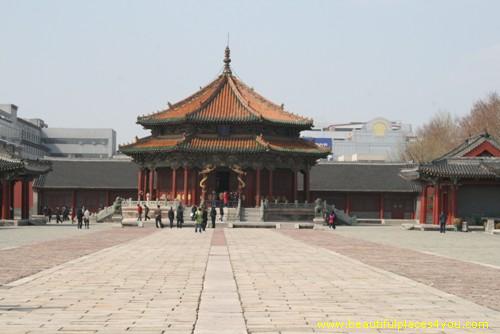
1625 Conquest of Shenyang

In 1625, Nurhaci conquered Shenyang and make it the Manchurian capital.
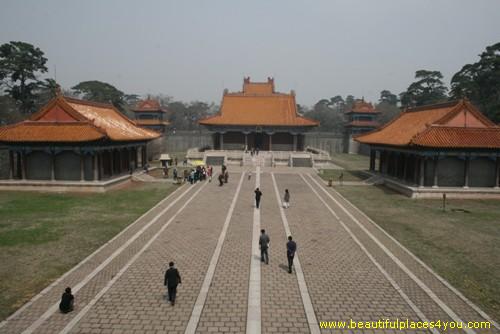
1626 Nurhaci passed away

Fuling Mausoleum is the mausoleum of Nurhachi. it is located in Shenyang City, Liaoning Province.

Emperor Taizhong

Temple & Personal Name:

‌清太宗皇太极

Taizong Hong Taiji

Era Name:

崇德

Chongde

Reign:

20 October 1626 –15 May 1636 (Khans of the Jin)

15 May 1636 – 21 September 1643 (Founder of Qing)

Hong Taiji continue to strengthen his artillery and continued to attack the Ming Empire. He renamed their Empire from Later Jin to Great Qing Empire.

Emperor Shunzhi

Temple & Personal Name:

清世祖顺治

Taizong Shunzhi

Era Name:

順治

Shunzhi

Reign:

30 October 1644 – 5 February 1661

Emperor Shunzhi was a 5 years old child and the regent, Dorgon ruled on behalf of the Emperor. The priority of the Emperor was to defeat the remaining forces of the Ming Dynasty. The last major forces was defeated in 1659 when Koxingga retreated to Taiwan.
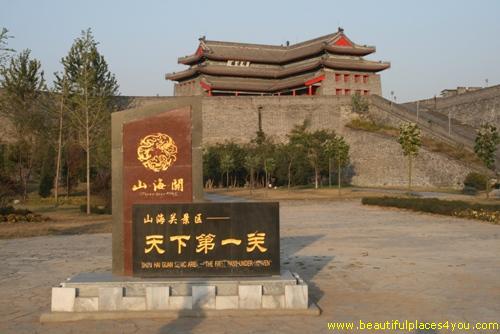
Wu Sangui, the general guarding the Great Wall at Shanhai Pass sided the Manchus during the internal conflict with Li Zhicheng. Manchu tropps entered Shanhai pass and conqured Beijing in 1644.

Emperor Shunzhi announced founding of new dynasty in China on 30 October 1644. The new dynasty focused on conquering the rest of China. 13 years old Emperor Shunzhi ruled the empire himself from 1650 when Dorgon passed away.

Ming officials were reappointed to help stabilized the empire. Ming officials and military leaders were persuaded to surrender. In 1645, Dorgon decreed all Ming men to have Manchu-style pigtails. Those who resisted were massacred. In 1646, Imperial exams was reestablished and continued till 1911.

You may also like